Wednesday, April 17, 2013

Since we last spoke...

To continue where I left off, I have been in far South India on a mission trip. And as I said before, the area where I've been, Kerala, has almost a 100% literacy rate. Education makes a huge difference in the way village people interact with me. Typically on mission trips, many of the patients' parents are illiterate and cannot fill in the hospital enrollment forms.

Another thing that was so different about this mission was that we handled far more "Priority 4" patients, which means that they were in need of additional surgery to previously repaired cleft lips and cleft palates. In other words, these were patients whose first surgeries had not gone well. (In most cases, either the lip scar was too big or the palate had another hole in it, which is known as a "fistula.")

Far more patients in Kerala had the ability to pay for surgery. Why was that? Kerala’s economy does not have a main industry. So most people looking for large, specific industries leave Kerala. Thus, the migration rate out of Kerala is very large. That means the price of labor is much more expensive than other Indian states and the people who stay make more.

But, because of corruption, the surgeons in small places like Alleppey, the town where the mission was located, do not really know what they are doing. They overcharge for surgeries they do not know how to do, and charge extra for medical supplies and appointments. As a result, palates easily fall to pieces, and lips have massive scars.

This mission was a “local mission.” This means that the team is smaller and composed solely of volunteers from India. (The international missions bring in a team from countries around the world. Although this was a local mission, I have to say we had a few doctors and nurses from Singapore.) All told, we did 64 surgeries!

This mission was so much fun for me for a couple of reasons. First, the interaction with the patients and their families was way different than in Guwahati. They loved handing their kids over to you and they loved laughing with you and talking with you (despite not knowing the same language). They were so much fun to hang out with. I became very close to many of the families.

We were working in an incredibly nice hospital. The hospital was so supportive of the mission and by the end of the week I knew everybody who worked there. I always work closely with the nurses on the mission and I became great friends with many of them. They did not just stare at me like I was from outer space, but instead genuinely wanted to welcome me to Kerala and get to know me.

My new friends: the nurses! 
Another new friend who works at the hospital.
Kinder Hospital hosted the Op Smile mission. 


The hospital is so nice and well designed. 
The cafeteria. 
The speech therapist on the mission ran her sessions very near where I worked. Although I do not understand the local language, I could understand what was going on. The speech therapist herself was born with a cleft palate. She had her first speech therapy appointment at 13 at which time her speech therapist told her that it would not be possible for anyone to ever understand her. She proved her speech therapist wrong by practicing nearly every minute of every day and by 15 everybody could understand her.

During the speech therapy appointments, the patient is joined by their family members. These patients have had a cleft palate surgery before but need more help with speech. I would estimate that half the time, when the patient was unable to perform the speech therapy exercises, the siblings would die laughing. I got so upset; steam came out of my ears. The truth is these poor people cannot even escape shame in their own homes.

But equally true is that from the classroom to the home, some of these patients have unbelievable stories of pushing themselves through school and pursuing friendships despite their speech problems. So many of the patients came every day to see the speech therapist, and by the end of the week you could really tell a difference. If the patients keep practicing, I have no doubt that their siblings and their classmates will understand them. And then they will feel no shame.

Sending smiles from India, 
Hannah

Other photos from the mission: 


Archana! Such a cutie (photo credits: Edmund Koh). 
Bye bye! She is going into the Operation Theatre all smiles.
After. 


Friday, April 5, 2013

Southern Hospitality

This week, I have travelled way down south to Alleppey, Kerala for an Operation Smile mission. Kerala is known as “God’s own country” and is one of the most beautiful states in India. Rolling hills, tea plantations, beaches, meandering backwaters, nice people, relatively clean towns, delicious food… Kerala seems to have it all. Unfortunately, I do not have enough time to see all of this, but just a smidjin of Kerala is a blessing. I never thought I would make it this far down south. I am literally at the tip of India as it juts into the Indian Ocean.

Kerala in red.
A is Alleppey
When I was driving from the Kochi airport to Alleppey, which is about a two hour drive, I noticed four things. The streets were clean. The traffic was calm. The office buildings were newly developed. And there were lots of Christian churches by the side of the road. I talked this over with my Indian friends and they confirmed that I was right on. They told me that coming from Guwahati, Kerala has to seem way different. Kerala has a 99% literacy rate, which explains why all of the signs are in the local language (Malayalam) and not in English. (In Guwahati, where most people speak Assameese but cannot read or write it, all of the signs are written in English.)

One of the many churches found in Kochi/Alleppy.

On screening day, which always comes on the front-end of the mission, I see all of the patients' files. One of the questions asks the parents if they can read and write. Most of the patients here, if not ALL of them, can read and write. They can sign the consent form instead of finger printing it as we often have to do in other parts of India. Most of the patients, if not all, know their birth date and age and have a medical background. For the first time, I sense a middle class in India.

Today, during the first day of surgery, only one out of twelve mothers cried when saying goodbye when their child was escorted into surgery. That is unheard of in my mission experience. All of the mothers were hanging out in the waiting area talking, laughing, and having fun. Never on any of my other missions, which have all taken place in North India, have the parents interacted with each other. The people here are so friendly, always willing to have a conversation, flash a smile at you, ask if you need anything. I feel like I am back home, comforted by a gold, old Southern lifestyle.

As I was explaining to the speech therapist how shocked I was regarding the differences between the north and south, she commented that it all starts with education. She asked the mothers waiting (about seven of them) what their highest grade in school had been and they all said "tenth standard," which is basically a high school senior year in India. And they also said all of their friends had graduated from tenth standard as well. The North needs to start taking notes from the South.

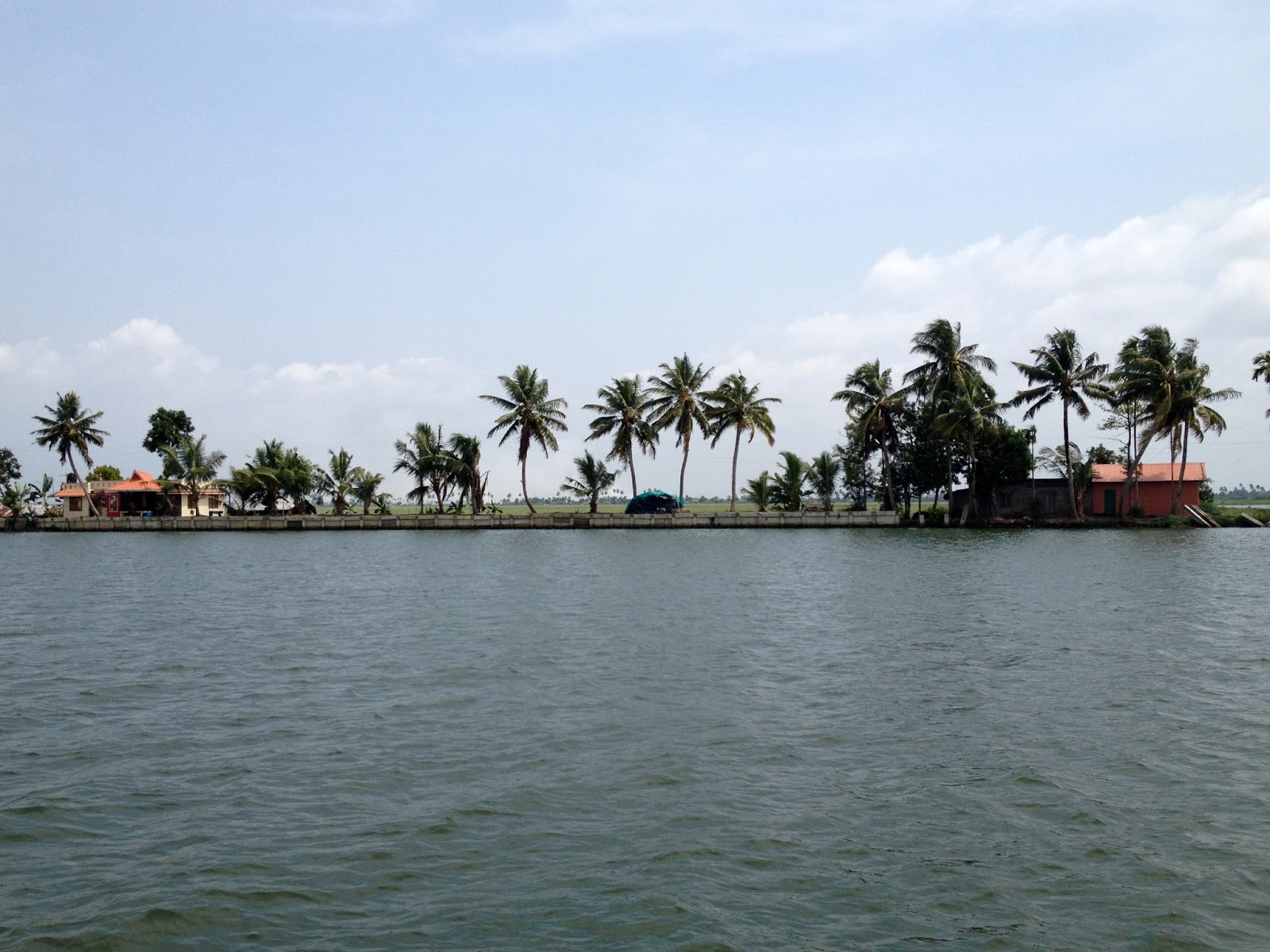
As for the beauty of Kerala, well, it ranges from the scenery to the food. On team day, which is our day off, we took a houseboat ride through the backwaters of Alleppy. Alleppy is known as the “gateway to Kerala’s backwaters.” Not only did I jump off the boat into the water and take a great swim, but I also got to see beautiful palm trees mixed in with miles of swampy backwaters. The food here is quite different. Of course there is rice and dal, but fresh fish (fish curry, masala fish, plain fish, etc), mixed veggies, fried bananas, uttapum (a rice pancake), and believe it or not beef fry are just some of the different cuisines found here.

I will have much more to tell about my visit to Kerala in a couple of more days. This visit keeps bringing me back to thinking about the Lakhtokia kids in the slum and is making me ask more questions. How can you make education the norm or something that everybody completes? Kerala and other southern states have accomplished that on a large scale. Is that because since India gained independence they managed to push it to the top of the government's agenda? Is it possible to change a culture that has been avoiding education for
over fifty years?

Sending smiles from India,
Hannah

Some photos from the week: 


Beautiful, eh?
The team's boat devoted to exploring the backwaters of Alleppy. 
The man steering the wheel is wearing a skirt called a Lungi, which is typical southern Indian male dress. 
Soaking wet after jumping into the backwaters.


"The local alcohol" shop. 
This shop is in the middle of nowhere in the backwaters but is famous for selling local  alcohol. 
Our lunch: freshly caught fish. 

Had a connecting flight in Mumbai and took a photo of my kindle as I read "Behind the Beautiful Forevers" and pass by the slum that the book is based on.

A depiction of a dancer from Kerala.